
What is a $500 loan and how does it work?
A $500 loan is a small installment loan paid out as one lump sum and repaid in fixed monthly payments, usually over 6 to 12 months, with the rate and schedule set by the lender.
Unlike a credit card, the full amount arrives once, and every payment reduces both principal and interest until the balance hits zero. Most online lenders deposit the money by ACH into your checking account and collect payments from that same account on agreed dates. Because the principal is small, the dollar cost of interest stays modest even at a mid-range APR, yet the percentage cost can still be high. That is why the rate deserves the same attention you would give a much larger personal loan.
People searching for loan instant cash options at this size usually want three things: a quick answer, a payment they can predict, and no surprise fees. We do not lend money ourselves. Our free form shares one request with a network of independent lenders, and a lender that can work with your profile may present an offer that you are free to accept or ignore. Submitting the form never obligates you to borrow.
Who usually asks to borrow $500?
Borrowers asking for $500 are most often working adults with steady pay who face one specific bill arriving before their next paycheck, such as a repair, a replacement item or a moving deposit.
Many of them keep a checking account in good standing and some savings, just not enough to absorb a surprise without falling behind on rent or utilities. Others are rebuilding credit after a rough patch and prefer a short, small personal loan they know they can finish. A line cook in Tucson whose glasses snapped during a dinner rush, or a retiree in Ohio whose front door latch finally gave out, fits the pattern well.
What these borrowers share is a narrow goal. They are not funding a project or reshaping their finances; they want one problem solved with a payment that fits inside the budget they already have. That focus is healthy, because the smaller and more defined the need, the easier it is to repay early and keep interest low. If you recognize yourself in that description, the sections below walk through the numbers and the paperwork in plain terms.
What can $500 realistically cover?
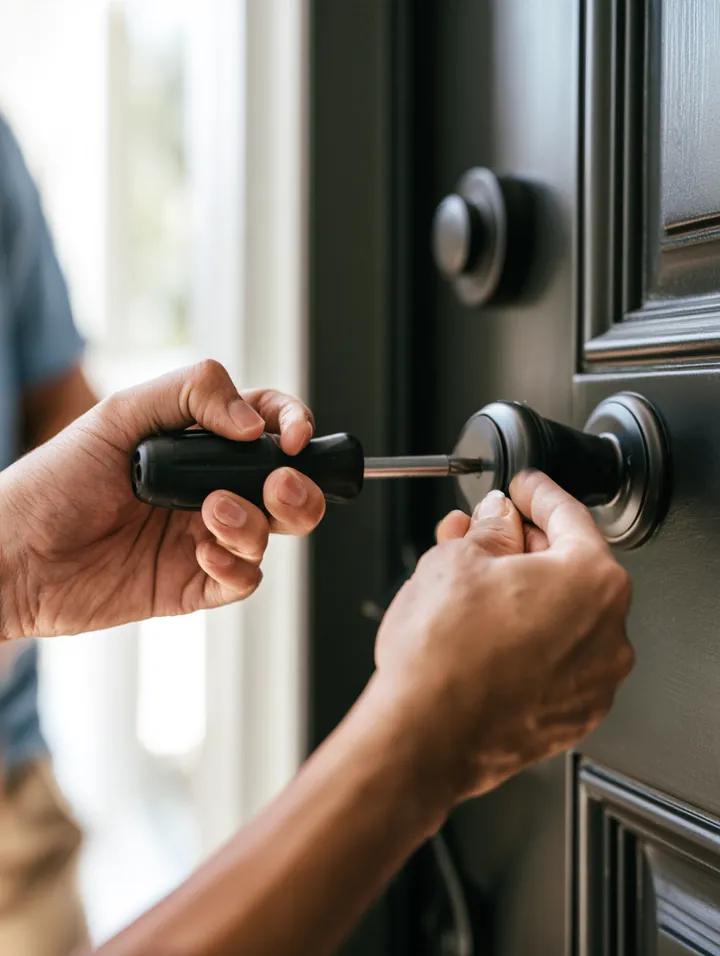
Five hundred dollars typically covers one modest, well-defined expense, such as replacement prescription glasses, new door hardware and a lock, a car battery with labor and a tow, or utility deposits during a move.
Replacement eyewear
Losing or breaking your glasses is more than an inconvenience when you drive for work or read screens all day. An eye exam plus a basic pair of prescription lenses and frames often lands somewhere in the low hundreds, as a rough estimate, and progressive or high-index lenses push the bill higher. Vision insurance may cover part of the cost, but many people discover the frame allowance is smaller than they assumed.
Small fixes around the front door
Worn hardware is a security problem, not just a cosmetic one. Replacing a handle set and deadbolt, repainting the door, and adding new weatherstripping around the frame is a classic weekend job that usually fits inside this amount. For bigger household problems, our guide to loans for small home repairs covers water heaters, leaks and HVAC parts.
Car battery, a tire or a tow
A dead battery or a flat that cannot be patched often arrives with a towing charge and a diagnostic fee attached. Those small charges stack up quickly, and a car that will not start can cost you a shift or two. A $500 loan can bridge that gap so the vehicle is back on the road the same week.
Moving and utility deposits
New utility accounts sometimes require a deposit, especially for renters with thin credit files. Add a rental truck and a stack of boxes, and a move across town can run past what is sitting in checking. Using a small personal loan for deposits you may get back later is a reasonable use, as long as the monthly payment is already built into your new budget.
Estimated monthly payments on a $500 loan
At an estimated 26.48% APR with no origination fee, borrowing $500 costs about $89.89 a month over 6 months, $61.86 a month over 9 months, or $47.88 a month over 12 months.
These personal loan figures are estimates for illustration, not offers. Your actual APR depends on the lender, your state and your credit profile, and it may come in lower or higher than the example. The representative example used across our site is a $500 balance repaid over 12 months at 26.48% APR, which works out to about $47.88 per month, $574.58 repaid in total and $74.58 in interest.
| Term | Estimated monthly payment | Estimated total repaid | Estimated interest |
|---|---|---|---|
| 6 months | $89.89 | $539.32 | $39.32 |
| 9 months | $61.86 | $556.77 | $56.77 |
| 12 months | $47.88 | $574.58 | $74.58 |
To test other rates or terms, enter your own numbers in our personal loan calculator before you submit anything. If a lender charges an origination fee, the amount you actually receive shrinks while the payment is still based on the full principal, so the real cost rises. Our page on typical APR ranges and loan fees explains where those charges appear in your disclosures.
Should you pick 6, 9 or 12 months to repay $500?
The shortest term you can comfortably afford usually costs the least: a 6-month schedule saves about $35 in estimated interest compared with 12 months, while the 12-month option lowers each payment by roughly $42.
That trade-off sounds simple, yet the right answer depends on how tight your monthly cash flow really is. A borrower with a few hundred dollars of slack each month can handle the 6-month payment and be finished before the season changes. A borrower whose budget is already stretched may be better off with 12 months, paying a little more interest while avoiding a missed payment that would bring late fees and credit damage.
A middle path also exists: choose the longer term for safety, then pay extra whenever you can. Many personal loans carry no prepayment penalty, so extra principal payments reduce the interest you owe. Confirm that point in the agreement, because a few lenders still charge for early payoff or apply extra money to future installments instead of principal.
The 9-month option often gets overlooked, but it can be the sweet spot for someone paid every two weeks. Splitting the estimated $61.86 across two paychecks means setting aside about $31 each time, which many households can manage without cutting essentials.
What documents and conditions come with a $500 loan?
Lenders reviewing a $500 loan request generally ask for proof of identity, a Social Security number, a verifiable source of regular income, an active checking account in your name, and a working email and phone.
You also need to be at least 18, or older in a few states, and a U.S. citizen or permanent resident. Our full eligibility checklist lists each item and why lenders ask for it. At this small size, verification is often lighter than for larger personal loans: some lenders confirm income through bank data instead of pay stubs, and some need only a recent statement.
- Identification: a driver's license or state ID that matches the name on your bank account.
- Income: recent pay stubs, a benefits letter, or bank deposits showing a steady pattern.
- Bank account: open for a while and free of a long string of overdrafts, since that is where funds land and payments come from.
- Contact details: an email you check daily and a phone that can receive text codes for e-signature.
Conditions matter as much as documents. Read whether the lender requires automatic payments, how large the late fee is, and whether a returned payment triggers a separate bank charge. On a small personal loan, fees that look minor on paper can add a meaningful percentage to the total cost.
Can you get a $500 loan with fair or bad credit?
Borrowers with fair or bad credit can submit a request for $500, and the small size sometimes helps, but approval is never assured and the APR offered is usually higher than for borrowers with strong scores.
Personal loan lenders look at more than a three-digit number. Steady income, a manageable debt load and a bank account without recent returned payments all count in your favor. A delivery driver in Georgia with a score in the low 600s but two years at the same job may look stronger to a lender than someone with a higher score and irregular deposits.
Many lenders begin with a soft credit inquiry that does not affect your score, then run a hard inquiry only when you accept and finalize. That sequence lets you see whether an offer exists before committing. If your credit is weak, expect any offer to sit toward the upper end of the APR range, and judge it by the total repaid rather than the monthly payment alone.
A small personal loan repaid on time can also help rebuild a thin or damaged file, because most online lenders report payments to at least one credit bureau. Ask whether the lender reports before you sign if that benefit matters to you.
How fast can $500 reach your bank account?
After approval and e-signature, many lenders send funds by ACH deposit as soon as the next business day, and some can fund the same business day when approval happens early, although timing is never promised.
The biggest delays on an online personal loan usually happen before approval, not after. A typo in your routing number, a name that does not match your ID, or an unanswered verification email can each add a day. Submitting on a Friday evening or right before a holiday often means the deposit arrives after the weekend, because ACH transfers move only on banking days.
If you need emergency cash immediately, ask whether the lender has a cutoff time for same-day processing, and find out whether your bank posts incoming ACH credits in the morning or late in the afternoon. Some credit unions release deposits faster than large national banks. Knowing those details lets you plan around a realistic window instead of hoping for the best.
Is $500 enough, or should you request $1,000?
Request $500 when one clearly priced expense fits inside that figure with a small cushion, and consider a larger amount only when a written quote shows the real cost is higher.
Borrowing too little can be as costly as borrowing too much. If the mechanic finds a second problem or the optician adds a lens coating, you may need another personal loan at a separate APR. Padding the request just in case, on the other hand, means paying interest on money that sits idle. Get a written quote first, add a modest buffer of around ten percent, and stop there.
When the quote clearly runs past this level, compare costs in our guide to borrowing $1,000, which covers 6-, 12- and 18-month terms. If your need is closer to $300, ask whether the provider offers an interest-free payment plan before you borrow at all. A 500 dollar loan is small, but it is still a contract with a cost, and the cheapest loan is the one sized exactly to the job.
Which mistakes make a small loan more expensive?
The costliest mistakes on small loans are accepting the first offer without comparing APR and fees, choosing a payment that leaves no room for groceries, and missing the first due date because autopay was not set up.
Comparing personal loan offers takes a few minutes and can change the total cost noticeably. Two lenders might both quote a payment near $48 a month, yet one adds an origination fee and the other does not. Line up the APR, the fee, the term and the total repaid side by side before choosing.
Timing mistakes cause trouble too. Set the first due date a few days after your paycheck lands, not before, and turn on payment reminders. If something goes wrong, call the lender before the due date; many will move a payment once if you ask early. A personal loan that stays current costs exactly what the disclosure says, while one that slips can grow quickly.
Before you sign, write down three numbers from the disclosure: the APR, the total of payments and the first due date. If any of them surprises you, pause and ask questions.
What are the alternatives to a $500 loan?
Alternatives include provider payment plans, a credit union small-dollar loan, an employer wage advance, a cash advance app, or local assistance programs, and each can cost less than an installment loan in the right situation.
- Payment plans: optical shops, utilities and repair shops sometimes split a bill into installments without interest if you ask before the due date.
- Credit unions: many offer small-dollar loans to members at capped rates, though membership rules vary.
- Employer advances: some employers advance part of wages you have already earned, often for a small fee or none.
- Cash advance apps: an app to borrow money against your next deposit may charge optional tips or express fees that translate into a high effective cost.
- Nonprofit help: community action agencies and nonprofit credit counselors can point you toward utility assistance or budget support.
An instant money loan is not automatically the best route just because it is quick. Compare the full cost of each option, including fees and the effect on next month's budget. When a free payment plan exists, take it; when it does not, a small personal loan with a clear APR is often easier to manage than a revolving balance that never seems to shrink.
How do you request a $500 loan through our form?
Requesting a $500 loan through our service takes one online form covering your contact details, income, bank information and the amount, after which participating lenders may review it and present an offer.
- Select $500 as the amount and choose the purpose that fits best.
- Enter your income, employment and checking account details exactly as they appear on your documents.
- Review any offer that appears, including the APR, fees, term and total repaid.
- Accept only if the numbers fit your budget, then e-sign with the lender directly.
Loan Instant Cash does not charge borrowers anything, does not make credit decisions and does not set rates or terms. A loan instant cash request is simply a way to reach several independent lenders with one set of details instead of filling out separate applications. If no offer fits, you walk away owing nothing, and you can revisit the alternatives above.
Whatever route you choose, borrow only what the job requires, compare the total cost of every personal loan offer, and read the agreement before signing. A small, well-planned loan can solve a real problem without creating a new one.
Frequently asked questions about a $500 loan
What is the monthly payment on a $500 loan over 12 months?
At an estimated 26.48% APR with no origination fee, a $500 loan repaid over 12 months costs about $47.88 per month, or $574.58 in total. Your actual payment depends on the APR and fees the lender offers, so treat this as an estimate only.
Can I repay a $500 loan early?
Many lenders allow early repayment without a penalty, which can lower the total interest you pay. Check the agreement for a prepayment clause and confirm that extra payments go toward principal before you sign.
Is $500 too small for an online lender?
No. Many online lenders and state-licensed small-installment lenders work with requests starting at $500. Some mainstream lenders set higher minimums, which is one reason sending one request to a network of lenders can help.
Will asking for $500 hurt my credit score?
Submitting a request usually starts with a soft inquiry, which does not affect your score. A hard inquiry typically happens only if you accept an offer and the lender finalizes the loan, and that can cause a small, temporary dip.