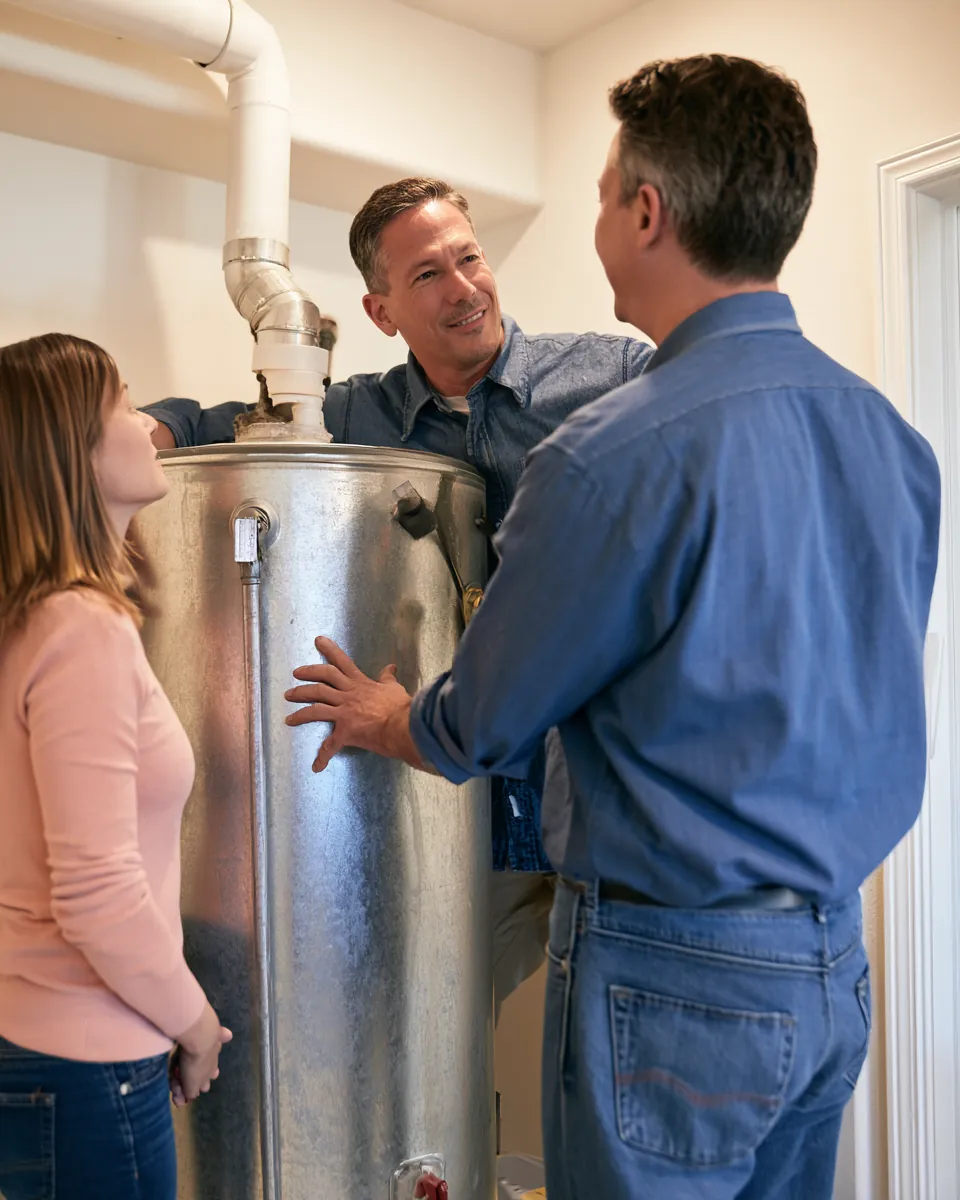
How much does a water heater replacement cost?
A standard tank water heater replacement often costs roughly $900 to $2,500 installed, while a tankless unit often runs about $1,500 to $5,000 or more, depending on fuel type, region and how much the installation must change.
Those are rough national estimates, not quotes. Labor rates, permit fees and building codes differ a lot from one city to the next, so a job in a high-cost metro can land well above a similar job in a small town. Homeowners comparing loan instant cash options or other ways to pay should treat the figures below as a starting point for a conversation with a licensed plumber, not a final price.
The biggest swing factor is whether you are doing a like-for-like swap. Replacing a 50-gallon gas tank with another 50-gallon gas tank in the same spot is the simplest, cheapest version of the job. Switching from tank to tankless, moving the unit, or changing from electric to gas can add venting, gas line, electrical or plumbing work that doubles the bill.
If you end up financing part of the bill, the numbers in this guide also help you size a personal loan correctly. Borrowing the exact amount of a written quote, rather than a round number that feels safe, keeps interest costs down.
How do tank and tankless water heater costs compare?
Tank water heaters usually cost less to buy and install, while tankless units cost more upfront but may use less energy and last longer, so the cheaper option depends on how long you plan to stay.
| Type | Unit price (parts) | Typical labor | Rough installed total |
|---|---|---|---|
| Electric tank, 40–50 gallon | $500–$1,200 | $300–$800 | $900–$2,000 |
| Gas tank, 40–50 gallon | $600–$1,500 | $400–$1,000 | $1,100–$2,500 |
| Heat pump (hybrid) tank | $1,300–$2,800 | $500–$1,200 | $1,800–$4,000+ |
| Electric tankless, whole house | $600–$1,500 | $800–$2,000 | $1,500–$3,500+ |
| Gas tankless, whole house | $1,000–$2,500 | $1,000–$2,500 | $2,000–$5,000+ |
A tank heater stores 30 to 80 gallons of hot water and reheats it around the clock. It is familiar to every plumber, parts are easy to find, and a straight swap can often be finished in half a day. The tradeoff is standby heat loss and a typical lifespan of roughly 8 to 12 years.
A tankless unit heats water only when a tap opens. Many models are rated to last 15 years or longer with maintenance, and they free up floor space. However, a whole-house gas tankless heater usually needs new stainless or plastic venting and sometimes a larger gas line, while an electric tankless model may need a heavy-duty circuit or even a panel upgrade. Those changes, not the unit itself, are why tankless installs carry such a wide price range.
Heat pump water heaters sit in between. They cost more than a standard electric tank, need some room to breathe and a condensate drain, yet they can sharply cut electricity use for many households. Some utilities and local programs offer rebates on efficient models, so ask your plumber and check your utility's website before choosing. If you are financing the job with a personal loan, remember that the higher upfront price also adds interest, which can stretch the payback period on an efficiency upgrade.

How much of the bill is parts versus labor?
On a simple tank swap, the unit and fittings often make up about half of the bill and labor the rest, while on a tankless conversion labor and new materials can easily exceed the price of the heater itself.
Parts go beyond the heater. A typical quote includes new water connectors, a gas flex line or wiring connection, a temperature and pressure relief valve, a discharge pipe, shutoff valves if the old ones are corroded, venting pieces and sometimes a drain pan. Plumbers usually mark up the materials they supply, which is normal, but the quote should still list the major items so you can see what you are paying for.
Labor covers draining and disconnecting the old unit, carrying it out, setting the new one, making the connections, testing for leaks and checking the draft on gas models. A routine swap in an accessible garage might take three to five hours. An attic install, a tight closet or a basement with a narrow staircase can add hours and a second worker. Some plumbers price the job flat rather than hourly; either way, ask what happens if they find a problem once the old tank is out. Itemized pricing also matters if you plan to use a personal loan, because both lenders and your own budget work better with a precise number.
- Ask whether the quote is flat-rate or time-and-materials.
- Confirm the brand, model, capacity and warranty length of the new unit.
- Check that valves, connectors and venting are listed rather than lumped together.
- Ask for the labor warranty in writing, separate from the manufacturer's tank warranty.
What do permits, haul-away and code upgrades add?
Permits, haul-away of the old tank and required code upgrades can add anywhere from under $100 to more than $1,000 to a water heater replacement, depending on local rules and what the old installation lacked.
Many cities and counties require a permit to replace a water heater, especially a gas unit, because a bad vent or a missing relief valve is a genuine safety hazard. The permit usually triggers an inspection. Licensed plumbers commonly pull the permit and roll the fee into the quote. If a contractor suggests skipping it, consider that a warning sign, since an unpermitted install can complicate a future home sale or an insurance claim.
| Item | Rough cost range | When it applies |
|---|---|---|
| Permit and inspection | $50–$400 | Required in many areas, especially for gas units |
| Haul-away and disposal of old tank | $0–$150 | Often included; some plumbers charge separately |
| Thermal expansion tank | $150–$350 installed | Common on homes with a check valve or pressure regulator |
| Drain pan and drain line | $40–$150 | Attic, closet or upper-floor installs |
| Seismic straps | $30–$100 | Required in some earthquake-prone states |
| Venting or gas line changes | $300–$1,500 | Most tankless conversions and some older gas homes |
| New electrical circuit | $500–$2,500+ | Electric tankless or heat pump units; more if the panel is full |
| After-hours or weekend surcharge | $100–$300 | Emergency service outside normal hours |
Code upgrades catch many homeowners off guard. If the old heater was installed before current rules took effect, the inspector may require an expansion tank, a properly routed relief-valve discharge pipe, combustion air changes or strapping. These items are not upsells; they bring the installation up to what your area now requires. A good quote mentions them upfront instead of springing them on you after the old tank is gone. Ask for every required item in writing so your savings plan or personal loan covers the whole job, not just the heater.
What factors push a water heater quote higher or lower?
Fuel type, tank size, location in the house, local labor rates, required code work and whether you need same-day emergency service are the main factors that push a water heater quote up or down.
Size matters less than people expect for tank units, since the jump from 40 to 50 gallons is modest. Location matters more. A heater in an open garage is easy to reach; one wedged into an attic over a finished ceiling needs extra care, a drain pan and often two workers. Access problems are the most common reason two quotes for the same model differ by several hundred dollars.
Timing also plays a role. A tank that fails on a Saturday night may come with a surcharge, and you have less time to shop around. Brand and warranty length add more variation: a 12-year tank warranty model usually costs more than a 6-year model built on a similar design. Finally, regional factors such as union labor rates, permit fees and stricter energy codes can make the same job noticeably more expensive in one part of the country than another.
A homeowner in a mild climate with a garage install might pay near the low end of the ranges above. A family in a cold-climate city converting an attic tank to gas tankless could land near the top, or above it, once venting and gas line work are included. Both outcomes are normal, and they lead to very different personal loan amounts if you finance the job.
Should you repair or replace your water heater?
Repair usually makes sense when a tank water heater is under about eight years old and the problem is a replaceable part, while replacement is often smarter when the tank itself leaks or the unit is near the end of its lifespan.
Many common failures are fixable for a few hundred dollars or less (rough estimate). Electric heaters often need a new heating element or thermostat. Gas heaters may need a new thermocouple, flame sensor or gas control valve. A leaking relief valve or drain valve can usually be swapped without replacing the tank. Rust-colored water may point to a worn anode rod, which is inexpensive to replace and can extend tank life.
A leak from the tank body is different. Once the steel tank corrodes through, there is no reliable repair; the only real fix is a new heater. Other signs that replacement is coming include rumbling or popping from heavy sediment, repeated part failures, water that never gets hot enough, and a unit past its expected lifespan. The serial number on the label often encodes the manufacturing date, and your plumber can decode it for you. Before paying for a full replacement or applying for a personal loan, ask the plumber to confirm in writing that a part-level repair is not realistic.
If the tank is actively leaking, turn off the cold water supply valve on top of the heater, then shut off the power at the breaker for electric units or turn the gas control to off or pilot for gas units. Those two steps limit damage while you line up a plumber.
When a full emergency hits, our 48-hour home repair emergency checklist walks through shutting off water, documenting damage and dealing with insurance before you sign anything.
How do you get accurate water heater quotes?
Accurate water heater quotes come from giving each plumber the same details, including fuel type, capacity, location, photos of the current setup and the model label, then comparing written, itemized bids rather than phone estimates.
Take clear photos of the heater, its label, the venting at the top, the gas or electrical connection and the space around it. Send the same photos to two or three licensed plumbers so every bid covers the same scope. Ask each one to separate the unit, labor, permit, haul-away and any code upgrades. A bid that is far lower than the others may be leaving out the permit or expansion tank, and a bid that is far higher may assume work you do not need. A clean, itemized bid also makes comparing personal loan offers simpler, since you know exactly how much to request.
Check the basics before you hire. Confirm the plumber's license with your state or local licensing board, ask about insurance, and read recent reviews for mentions of surprise charges. Be cautious with any contractor who wants full payment upfront; a modest deposit for ordering a special unit can be reasonable, but most standard tank swaps are paid when the work is done and inspected.
Not every home emergency allows three quotes. If you have no hot water and a small child in the house, a same-day replacement from a reputable company may be worth a slightly higher price. Even then, ask for the itemized quote in writing before work starts.
How can you pay for a new water heater, including a loan instant cash request?
Homeowners typically pay for a water heater with savings, a plumber's financing plan, a credit card, a utility rebate, or a personal loan, and a loan instant cash request is one way to see offers from independent lenders.
Savings are the cheapest source when you have them. Plumber financing can be convenient, but read the terms closely: some plans carry deferred interest, which means interest from the start date is charged if the balance is not paid in full by a deadline. Credit cards work for smaller bills you can clear within a few months, yet high variable rates make them costly if the balance lingers. Members of a credit union can also ask about a small personal loan there, which sometimes carries a lower rate than online options.
A fixed-rate personal loan spreads the cost into predictable monthly payments. Our service is a free loan-request service, not a lender: you submit one form, it goes to a network of third-party lenders, and a lender that can work with your request may present an offer. Amounts range from $500 to $5,000, with terms commonly around 3 to 36 months depending on the lender and state. People sometimes look for same day cash loans when a heater fails, and while some lenders can fund the same business day when approved early, many send money by ACH the next business day, so timing is never assured.
Submitting a loan instant cash request does not obligate you to accept an offer, and many lenders prequalify with a soft inquiry that does not affect your credit score. A hard inquiry usually happens only when you accept and finalize. If you need emergency cash immediately because a tank has flooded a closet, focus first on stopping the water, then compare offers calmly once a plumber has given you a firm number.
| Amount | Term | Estimated monthly payment | Estimated total repaid |
|---|---|---|---|
| $1,000 | 12 months | $95.76 | $1,149.17 |
| $1,500 | 12 months | $143.65 | $1,723.75 |
| $1,500 | 18 months | $101.88 | $1,833.85 |
| $2,000 | 18 months | $135.84 | $2,445.13 |
| $4,000 | 36 months | $162.19 | $5,838.73 |
A typical tank swap lands near a $1,500 loan amount for a standard replacement, while a tankless conversion may push toward the upper end of the range. Before you submit, review the basic eligibility requirements for a personal loan request, and compare each offer's APR and any origination fee deducted from the loan. If you want to model different amounts or terms, the loan payment calculator shows estimated payments side by side.
Borrow only what the itemized quote requires. If a rebate will arrive later, consider whether you can cover that portion from savings instead of financing it. Our guide to personal loans for home repairs like water heaters and plumbing covers how these loans compare with contractor plans and credit cards for small household fixes.
How can you make a new water heater last longer?
Flushing sediment once a year, checking the anode rod every few years, testing the relief valve and keeping the temperature near 120 degrees Fahrenheit can help a new water heater last closer to the top of its expected range.
Sediment from hard water settles at the bottom of a tank, insulates the water from the burner or element, and makes the heater work harder. Draining a few gallons through the drain valve each year, or a full flush if your plumber recommends it, keeps that layer thin. In hard-water areas, a whole-house softener or a scale-reducing filter for tankless units can protect the investment. Routine care costs far less than an early replacement financed with another personal loan.
The anode rod is a sacrificial metal rod that corrodes so the tank does not. Checking it every three to five years, and replacing it when it is mostly eaten away, is one of the cheapest ways to extend tank life. Tankless units need a different routine: periodic descaling with a pump kit and vinegar or a manufacturer-approved solution, plus cleaning the inlet screen.
Finally, register the warranty, keep the receipt and permit paperwork with your home records, and write the install date on the unit with a marker. A few minutes of record-keeping now makes the next decision easier, whether that is a covered warranty repair or planning ahead with savings instead of a personal loan when the heater eventually wears out.

Home Repair Emergency Checklist: What to Do in the First 48 Hours
What to do in the first 48 hours after a leak, HVAC breakdown or electrical failure at home.

How Can You Get Emergency Cash Immediately?
Ranked, realistic ways to raise money for an urgent bill, with pros, cons and honest timing for each option.